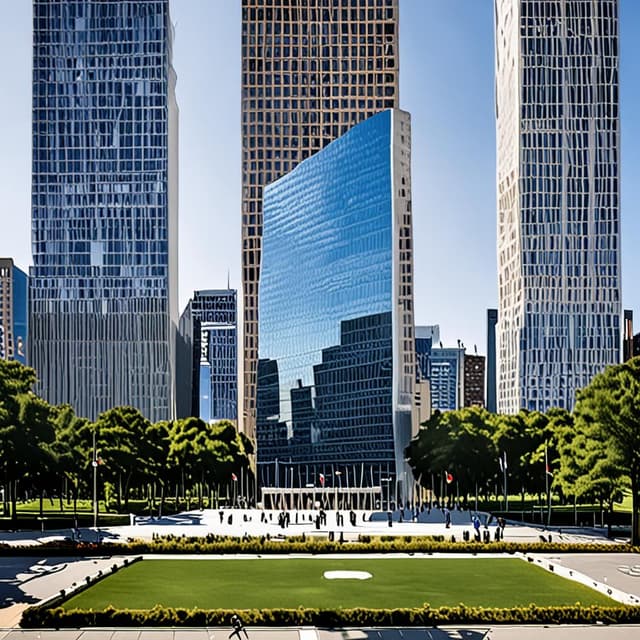
| Name | United Nations Federation (UNF) |
| Roles | Intervening militarily • Intervening economically |
| Founded | 1939 |
| Purpose | Prevent catastrophic world wars and maintain international peace and security |
| Challenges | Internal tensions • Ideological battles • Challenges from member states |
| Governance | Powerful supranational governing body |
| Current State | Grappling with the rise of authoritarianism and theocracy on the global stage |
| Geopolitical Dynamics | Dominated by a bloc of democratic 'Western' nations rather than a bipolar Cold War |
The United Nations Federation (UNF) was established in 1939 by a coalition of democratic nations, including France, Britain, United States, Canada, Australia, New Zealand, Netherlands, and Belgium. This was in direct response to the growing threat of fascism and militarism from Nazi Germany, Italy, and Japan. Unlike the real-world United Nations, the UNF was granted significantly greater governing powers from the outset, with its own legislature, executive branch, and judicial system.
In its early years, the UNF played a crucial role in coordinating the Allied war effort against the Axis powers, providing both military and economic support. The organization's military intervention was instrumental in the Allied victory in World War II. Following the war, the UNF oversaw the denazification and democratization of the Axis countries, as well as the decolonization process in many parts of the world.
During the ensuing Cold War period, the UNF found itself at the center of global geopolitical tensions. Rather than a bipolar superpower dynamic as in our timeline, the UNF became dominated by a "Western Bloc" of democratic nations, including the original founding members as well as newer entrants like West Germany, Italy, Spain, and Japan. This Western Bloc was locked in an ideological and economic struggle against the authoritarian, communist-leaning "Eastern Bloc" led by the Soviet Union and its satellite states.
The UNF played a key role in containing the spread of communism, providing economic aid and military support to anti-communist movements and governments around the world. This included controversial interventions in conflicts like the Korean War, Vietnam War, and various proxy wars in Africa and Latin America. The organization also imposed economic sanctions and trade restrictions on Eastern Bloc nations, fueling tensions.
As the 20th century drew to a close, the UNF faced growing challenges to its authority and legitimacy. The collapse of the Soviet Union in 1991 had upended the geopolitical dynamics, leading to a unipolar world dominated by the Western Bloc. However, this also gave rise to new power centers seeking to challenge UNF dominance.
The turn of the millennium saw the emergence of authoritarian, nationalist movements in parts of Eastern Europe, Asia, and Africa. These regimes, such as Russia, China, Iran, and Saudi Arabia, sought to limit UNF influence and assert their own spheres of control. Tensions flared as the UNF attempted to intervene in conflicts like the Second Chechen War, the Taiwan Strait Crisis, and the Syrian Civil War.
Additionally, the UNF came under fire from religious fundamentalist movements, particularly Islamic extremism. High-profile terrorist attacks, such as the 9/11 attacks in New York City, galvanized calls for a "clash of civilizations" between the West and the Muslim world. This religious-political divide further complicated the UNF's ability to maintain global stability and security.
In the 2010s and 2020s, the political dynamics within the UNF have become increasingly defined by ideological battles between democratic, authoritarian, and theocratic forces. The "Western Bloc" has struggled to maintain its unity and hegemony, as nationalist and populist movements have gained ground in many member states.
The rise of figures like Donald Trump in the United States, Marine Le Pen in France, and Geert Wilders in the Netherlands has strained the UNF's commitment to liberal democracy. These leaders have sought to curb the organization's powers, withdraw from international agreements, and pursue unilateral "America First" or "Europe First" policies.
Meanwhile, authoritarian regimes in Russia, China, Turkey, and Brazil have become more assertive in challenging UNF authority, using economic leverage, cyberattacks, and proxy conflicts to undermine the organization. The emergence of theocratic movements, such as the Islamic State and the Taliban, has further complicated the UNF's efforts to maintain global security and human rights.
As the UNF navigates these turbulent waters, its future remains uncertain. Will the organization be able to adapt and evolve to meet the challenges of the 21st century, or will it succumb to the centrifugal forces of nationalism, authoritarianism, and religious extremism? The outcome will have profound implications for the stability and prosperity of the entire world.
